 GORM TEPER
How not to get your gear stolen!
Posted on April 27, 2017
Disclaimer! You may or may not get your gear stolen, and just because you read this article, does not mean that suddenly you are invincible. The following tips have worked for me and I am simply sharing my experiences – not guarantees!
Introduction
Let me start my saying that I have never ever been mugged (with or without a camera), never got into a fight (that I didn’t start). I have been into photography for about 10 years now, and I have never lost anything for got anything stolen (touching wood now..). Some may say this is luck, but it is more than that. I have been traveling to big dirty cities like Melbourne, Berlin, Paris, San Francisco, Minneapolis, Saigon, Phnom Penh etc. It’s not luck, its conduct and awareness.
The Problem

Hi! Credit
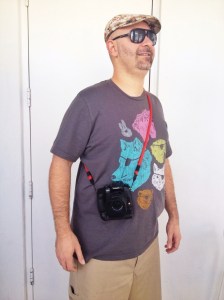
The problem is that many people look a bit like this guy when they travel. Typically most tourists also swing about a fancy camera, and generally have money to spend. Especially westerners visiting developing countries, have wealth, just in what they carry equivalent to months or years of local salary. This is something tourists don’t often think about.
This article is not just about protecting your camera, it’s also about conduct, and understanding why you might lose your camera. Because of the, sometimes ignorant and obnoxious bloke on the right, the locals have unfortunately learnt that often it’s quite easy stealing a camera or bag from visitors. If they have get 3 years’ salary from a single camera then that sounds like a sweet deal to me. These people are not necessarily bad, it’s just that temptation got the best of them. Unfortunately sometimes these events can end in tragedy; in 2005 a French tourist was dragged into traffic and killed as a man on a motorbike attempted to take her backpack in Vietnam.
Understanding Money in the third world
I have had many experiences that drove home just how little money some people make (compared to us). Here are some examples:
Vietnam
I think it was in 2013 when we were visiting Hoi An in Vietnam. We had been traveling through Vietnam for about a month, and fancied a stay at one of the resorts on the coast. It was bliss, amazing service, food, pool and location. There was a bar in the pool (as there often is), and the bartender was very friendly. I spoke to him about our travels and family. The conversation shifted to his job. He got $75 USD per month. This man was good at his job, educated, and spoke very good English. He worked for a successful 5 star resort.
Cambodia
In 2012 we hired a tuk tuk driver in Siem Reap to drive us around to see all the temples near Ankor Wat. His rate was $1-2 USD per day. He was a very quiet young man. Very polite, but due to the language problems he came across initially as a bit unreliable or uncertain. We used him for 3-4 days. The first day I tipped him $1 extra (a full day’s wage). The next day he didn’t turn up, and I thought; ‘great there goes that, he must think he does not need to work today.’ He finally did come, and looked rather tired. Perhaps he was celebrating the tip? Or more likely he has young kids or family to take care of. As we went out we stopped by a fuel place, and he asked for that day’s pay in advanced, which was fine. It is very typical that the younger generation send money to their family when they have it.
Indonesia
Many years ago in the 90s I was growing up in Indonesia. My family went to visit one of the volcanos on Java. It had recently erupted, and there was wide spread destruction. The volcano was still smoking quite a lot. I remember all the black rock, and grey ash everywhere. I cannot remember how, but we picked up a local and he guided us around. At the end of it, my father paid him for his troubles, an amount I think was about $10 USD or less. The man was completely beside himself with joy, it was incredible to see.
My 5D Mark III with the 16-35mm 2.8L II attached costs around $4800 USD
How does that compare to the above? How many of the locals do you think know that? What would happen if they did? They just know it’s expensive, and perhaps could bring good fortune. Luckily, more often than not, these are good people that understand robbing tourists is; a) Not what they would like to do, b) not a good business model in the long run.
Conduct

Superman in Action.. Credit
By conduct I mean your conduct, the way you pack your gear, the way you carry your gear and the way you hold your gear. How do you use the strap? How do you change lenses? Where do you change lenses? It’s not just about preventing theft, it’s also about preventing ‘accidents’ from happening, or preventing loss of equipment by being cautious, rather than careless.
I usually travel with a DSLR and 4-5 lenses. For this I use a camera backpack to carry it around. It’s not the most stylish, but I find it the most practical. I always make sure that anything I’m carrying can disappear inside the backpack without space problems. So if it starts raining or if I don’t want anyone to see that I have a big camera, I can get rid of my gear. My backpack’s main compartment can only be accessed if you are not carrying it – zipper is on the back panel. That is nice, as it means that no-one can just open the zipper and pull out the camera gear behind you.
When I’m on the plane, I always carry it hand luggage, and try to always put the bag under my seat in front of me. This way, it can’t fall out of the locker, because it’s already on the floor, it also means that I have my camera available for take-off and landing photo opportunities. One tip: Airlines are always wary of hard case or suitcase style hand luggage, and always weight this and sometime try to check them in. They rarely question or even weigh soft backpacks. I think they have been instructed this way to minimize luggage damage. So when you check in, wear your backpack and smile…
A good backpack is much harder to remove from you than a shoulder bag. As it does not swing about (if worn properly) it’s also much more practical than other bags. You should be clean, tidy and dynamic. Not have 10 things strapped to the outside of the bag, all clinking in the wind. Do not attract unnecessary attention to yourself. If you got a brand new bag, put some mud on it or something… Just kidding. You get the idea.
Good way to use strap Credit
If I need to take off the bag at a restaurant for example, I usually always have it under the table between my legs. Never leave your camera bag more than 30cm from you. Always think about making it inconvenient to steal. Make it difficult for anyone to ‘grab’ your stuff.
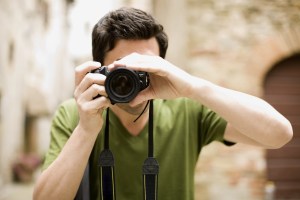
In regards to handling your camera, there are many ways now-a-days. Lots of fancy systems and clever straps. I can’t comment on these, I just use a normal strap. But apply simplicity, and remember not to attract too much attention to yourself. If your fancy strap looks expensive it will probably work against you. What I can recommend is that you ALWAYS wear the strap, always. I try to as much as possible, to put my arm through the strap as well. That way the strap is under my right arm, see the photo below. If you wear the strap, but just have the camera hanging around your neck bouncing along on your belly, then it’s really easy to just pull it over your head – gone. Even when you wear the strap, hold the camera in your hand. I have seen a lot of people just hang the camera on their shoulder…like a woman’s hand bag.. and it’s so easy to pull it off them. If you don’t wear the strap, then the strap itself becomes a great way to pull the camera out of your hands. If you don’t wear the strap and you drop your camera – guess what happens… WEAR THE STRAP.
Finally, I just want to talk about changing lenses. As you might know, I’m a prime shooter and frequently change lenses. I try to make it as quick as possible, and I can change lens in less than 20 seconds. 20 seconds is not a long time to be ‘exposed’ for. Nonetheless I try to always find a very quiet corner to change lens. Even if it means walking 20m, its better than broadcasting that you have 6 Canon L lenses in your bag to everyone around you. Also, don’t leave the body cap off for very long. Your sensor is exposed. What you should do is this:
- Decide what glass you need before open your bag.
- Find a nice quiet area to open your bag.
- Undo the end cap of the new lens, so it sits loose.
- Remove the old lens from you camera, and put the new end cap on the old lens.
- Throw the old lens in your bag (where the camera sits, with its hood attached.)
- Mount the new lens – done.
What not to do
- Don’t assume that everyone around you wants to steal your gear…
- Don’t leave your camera gear unattended.
- Don’t not use the camera strap…
- Don’t check in camera gear on planes..
- Don’t walk right on the edge of the sidewalk nearest the road, with a camera dangling loosely on your shoulder.
- Don’t take the lens off your camera lens and then just leave your camera lying there exposed to the elements while you fumble with your bag and lenses or ages.
- Don’t let people see what’s in your camera bag.
- Don’t change lens in bad weather.
Forget something? Credit

Right… Credit
Always Remember
- Try to always use the hood. Hoods protect the lens from knocks.
- Always point the camera down when it hasn’t got a lens attached.
- Wear the camera strap…..
- Pick your camera bag wisely, and get one with a weather cover.
- Always hold your camera even when you’re just walking around.
- Put your arm through the camera strap to have more control.
- Always be aware of your surroundings, and keep an eye out for dodgy characters.
- Remember, make it difficult for them. Sometimes I tie zippers together loosely. Anything that does not go to plan for them will tip you off that something is wrong.
- Don’t buy too large capacity SD/CF cards… Do you want to lose photos from all the trip or ¼ of the trip?
- Always have faith in human kindness! Smile and enjoy the moment!
Happy Shooting!
Shanghai
Posted on April 17, 2017
A few weeks ago I was lucky enough to have a week in Shanghai for business reasons. I managed to get out and see the city a little bit, and take some photos! Shanghai is now the largest city is the world. I feel very fortunate that I had a little spare time there. I hope to go back and see more of China soon! Here are some of my highlights!

Shanghai Skyline from The Bund. 5D Mark III | 24mm 1.4 Art
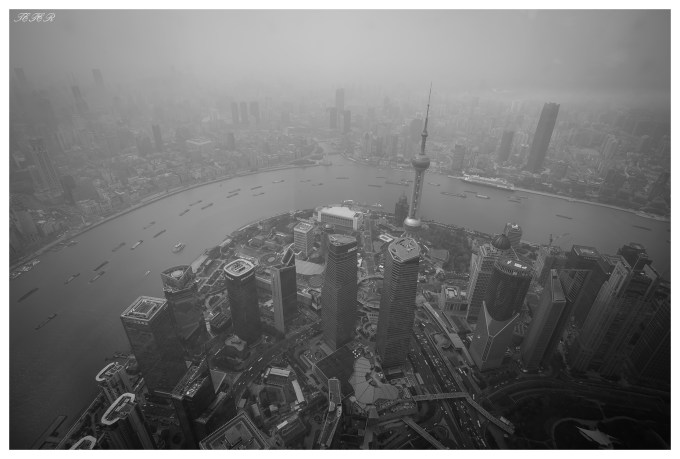
View from Shanghai Tower. 5D Mark III | 16-35mm 2.8L II
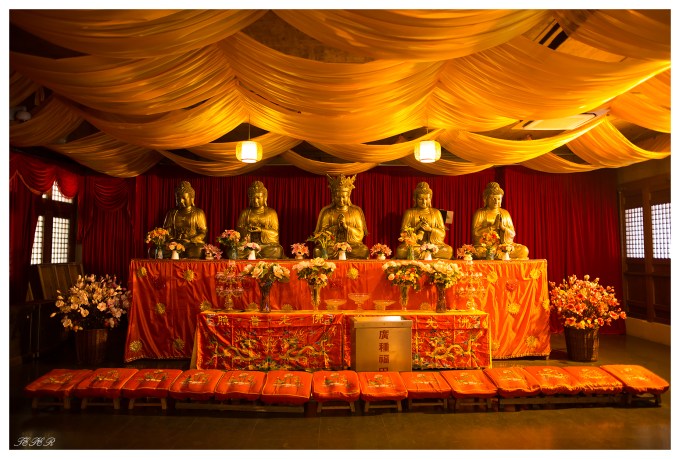
Jing’an temple 5D Mark III | 24mm 1.4 Art

Jade Buddha Temple. 5D Mark III | 135mm f2L
For the full Shanghai album, please click here
A weekend in Cinque Terre
Posted on April 9, 2017

Corniglia, 5D Mark III | 16-35mm 2.8L II
It was my wife’s birthday and we decided to take a long weekend trip somewhere. She, being Asian, and sick of winter naturally wanted to go somewhere warm! We checked out last minute flights, but in the end decided to go to the Cinque Terre region in Italy. It is only a 6 hour drive from Garmisch Partekirchen in Germany. Cinque Terre is somewhere I also wanted to see for ages, its a great place for photography. The region is renowned for it’s rugged terrain, plantations of lemon and other fruits, and of course it’s amazing villages perched on the cliffs. We decided to head for Vernazza, one of the 5 main towns to see, where we got a great little bed and breakfast place.
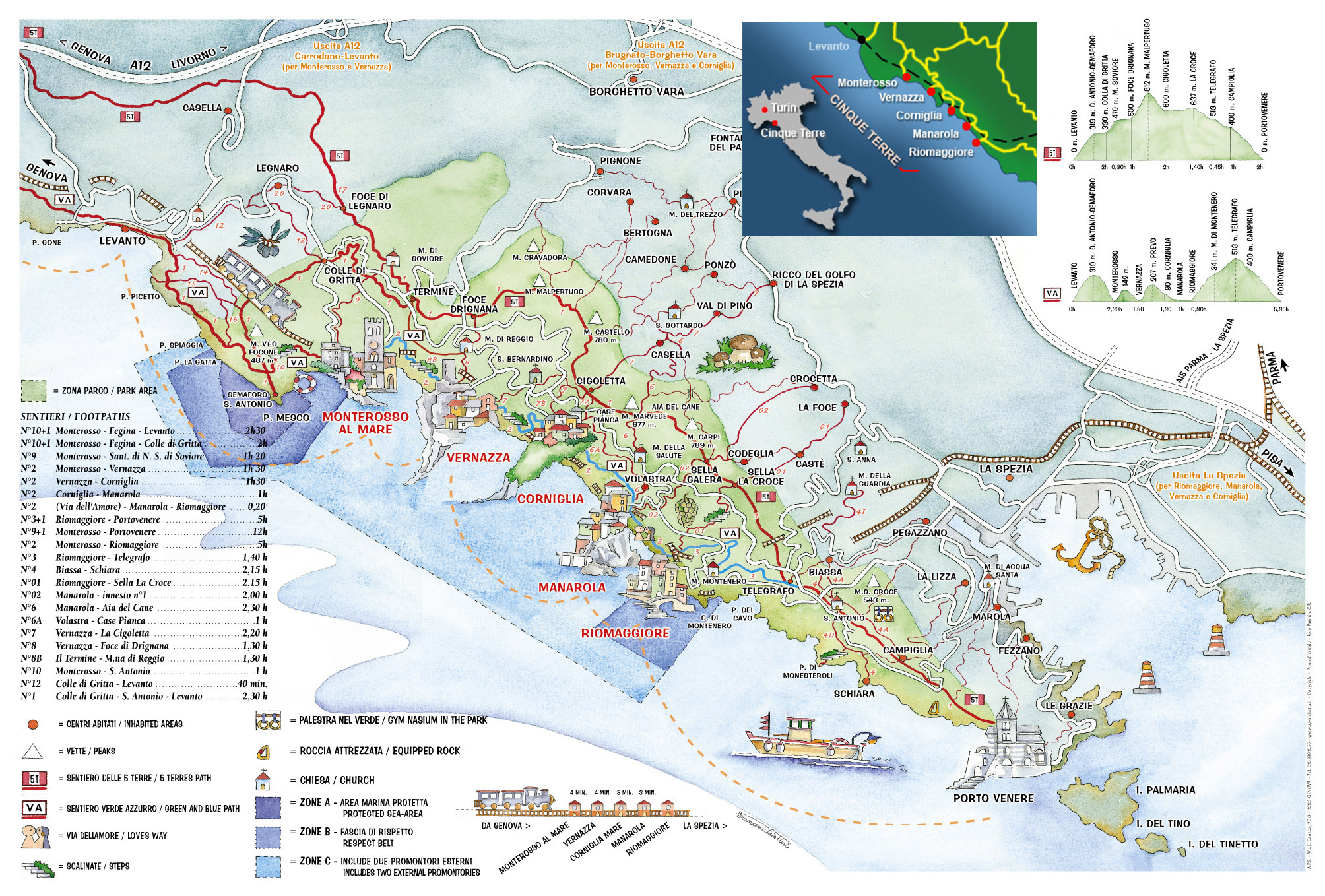
Map of Cinque Terre, credit: https://cinqueterre.a-turist.com/map
As you can see from the map above, the five towns are close together, and linked easily by train. Cars are not allowed in most villages, and we parked our car about 1.2km away from Vernazza and had to walk down, but not not a big deal. You can also go between the villages by boat, which is suppose to be a relaxing way of commuting, but in low season these don’t run. Apart from driving which I wouldn’t recommend due to parking and the very narrow roads, the only other way is to hike. We hiked from Vernazza to Monterosso which takes around 2-3 hours. The trip is well worth it for the scenery, and it was very pleasant!
The region is renowned for it’s rugged terrain, plantations of lemon and other fruits, and of course it’s amazing villages perched on the cliffs.

Enjoying the sun on the trail between Vernazza and Monterosso, 5D Mark III | 50mm 1.4 Art

View from the trail down to Vernazza, 5D Mark III | 50mm 1.4 Art
I would recommend going in shoulder season, as I can imagine that there would be a lot of tourists in the middle of August. We already in late March saw tour groups. Having said that, we found that not that many people actually stay in the towns, at least not in Vernazza. It seems most tourists come by the train for just a few hours.
This is really a photographer’s paradise.
Good to know
- The roads in the Cinque Terre region are very narrow. If you have a big car or camper, you really need to consider this. Also, for the most part is it not possible to drive into the villages, you need to park outside the villages, and walk in with your stuff.
- The towns are quite small, and you will run out of things to do and see in each of them soon enough, so plan to see at least a couple of villages on your stay. That’s not to say they are boring, they certainly are not, they are very charming.
- Accommodation can quickly run out in your chosen village, so book early, and have a back up plan. We stayed at A Cà Da Nonna Di Callo Luca and it was very comfortable, and just 70 Euros per night with everything included and a good bathroom. I would highly recommend them! Find them on Booking.com. If all is lost, and you cannot stay in the villages, staying at La Spezia is a workable option. The train runs frequently and its a short trip.
- There is a hiking trail which runs through the region, and links up with the villages, for the more adventurous type this is really worth while. The track is well used, but a little rugged and steep in parts. It should be noted here that tent use is really difficult, and there is only one tent site 40mins away from Vernazza.
- There are small supermarkets if you need something, or planning on cooking yourself. There are also several good restaurants in each village. Prices are reasonable.
- We found the train a good way to get between villages, after you get used to the system. We got single tickets, but it is possible to get a day ticket for 13 Euros.

Monterosso, 5D Mark III | 16-35mm 2.8L II & B+W CPL
Photography Tips
This is really a photographer’s paradise. The scenery is great, the villages are colorful and the water is clear. After first seeing some photos from the region, I always wanted to go there. For the most part, it is the landscape photography opportunities which appeal most. Unfortunately, the light wasn’t very special when we were there, but I tried to make the best of it. Each village has several good vantage points for the best photos, but these can initially be a little hard to find, so check them out early or before you have to shoot the sunrise. You may also have a look at the local post office for post cards, and get an idea of the vantage points in advanced.
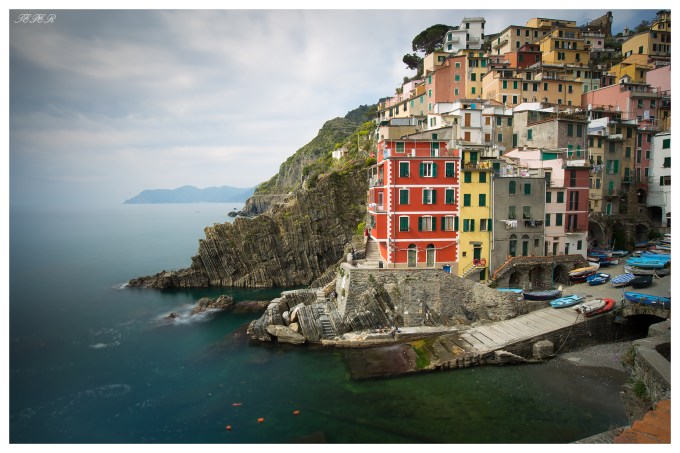
This is really the photo I wanted to get! 5D Mark III | 16-35mm 2.8L II | Lee Little Stopper & B+W CPL.

Dawn in Vernazza. 5D Mark III | 24mm 1.4 Art | Lee Pro-Glass 0.9 + GND 0.6 & X4 CPL
Usually, these vantage points are on the trail leading in and out of the village, this was certainly the case with Vernazza. Bring a tripod, and if you have filters bring them along. I got the above two images with a combination of neutral density filters, grad filters and polariser. Any scenic coastal environment such as Cinque Terre begs for long exposures and landscape filter use. I used my Canon 5D Mark III along with several lenses; 16-35mm 2.8L II, 14mm 2.8, 24mm 1.4 Art, 50mm 1.4 Art and the 100-400mm 4.5-5.6L IS II. Its really important to have a polariser handy to bring out the colour, refer to my short write up about polariser use here.

Vernazza at night, 5D Mark III | 24mm 1.4 Art
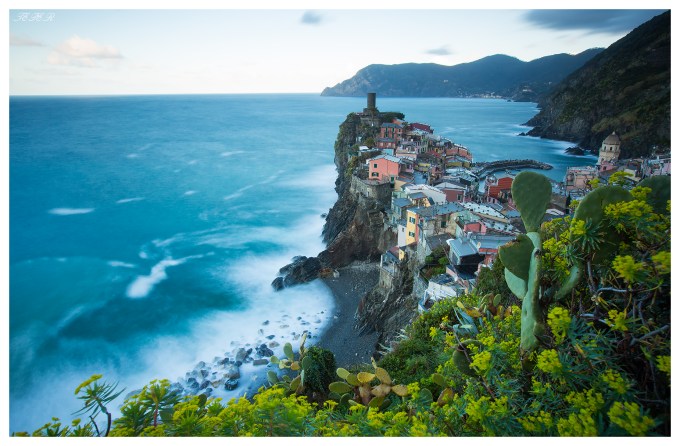
Vernazza at dawn, 5D Mark III | 16-35mm 2.8L II | Lee Little Stopper & B+W CPL | 46 seconds
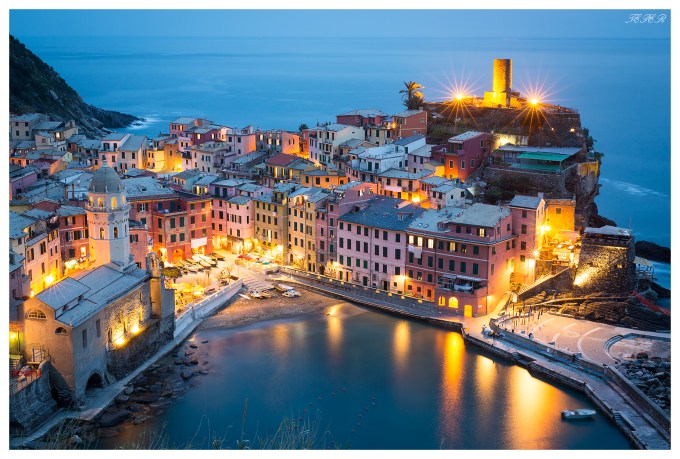
Vernazza at dusk, 5D Mark III | 50mm 1.4 Art | Lee Pro-Glass 0.9 & X4 CPL | 48 seconds
Its really important to have a polariser handy to bring out the colour
Most of the shots above are 20-60 second exposures, using Lee neutral density filters. This is a great way to smooth out water and create drama in the picture. The other advantage of using ND filters is that due to the long exposure time, people who walk into your image don’t necessarily appear in the end result (as long as they keep moving!). If you are not into landscape photography, there are good street photography opportunities as well!
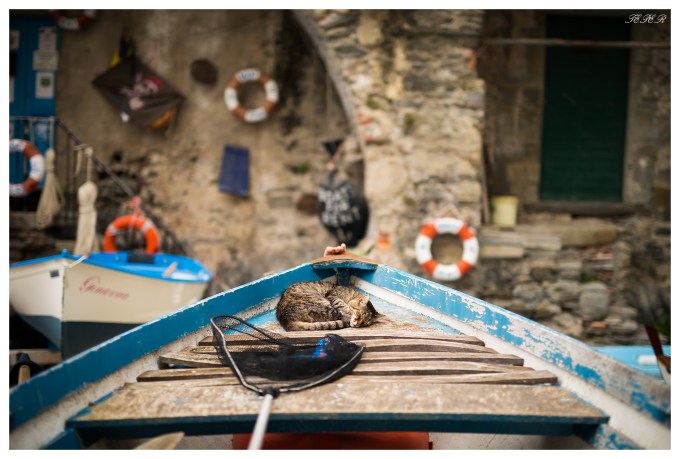
Good place for a nap, Riomaggiore. 5D Mark III | 50mm 1.4 Art

Riomaggiore, 5D Mark III | 16-35mm 2.8L II

Vanessa in Corniglia, 5D Mark III | 50mm 1.4 Art
Photography in Cinque Terre;
- Great location for landscape photography – Bring your tripod!
- If you have landscape filters – bring them, you will need them.
- If you don’t have a polariser, invest in one, they are well worth it here.
- If you want tourist free pictures, get up early, and watch the sun-rise.
- Using neutral density filters can remove people from images.
- Use the trail linking up the villages. There are great vantage points along it.
- Each village has something unique about it, and they are all worth visiting.
Hope you enjoyed reading this post about the Cinque Terre region. Please subscribe to my blog to stay up to date on all posts so you don’t miss a thing! Please comment or contact, I would appreciate the feedback.
Gallery from the weekend


Fasching! (Carnival Season)
Posted on March 19, 2017

Dance girls at Fasching in Rieden am Forggensee, 5D Mark III | 85mm 1.2L II at 1.2.
Fasching is Germany’s carnival season. In Bavaria where I live, it’s taken very seriously! It starts November 11th, and lasts a couple of months until Shroud Tuesday. It is basically a Roman Catholic and Christian Orthodox celebration. It’s a time where people let their hair down, dress up and drink lots of beer. Although not an official holiday, everything grinds to a halt around Fasching. In many towns, there are Faschingsumzug, or parades. Here everyone that has dressed up has a chance to act silly with their friends.
Fasching is a party time and lots of fun. I went along to one of the local village’s parade in Rieden am Forggensee, near Fussen. To be successful at Fasching, you need a crazy costume, lots of beer and good friends!
Here are some photos from the day. All taken with the 85L. It’s slow focus was an issue at times, but I did manage to get a few keepers.


Great Ocean Road
Posted on March 8, 2017
Hello guys! Finally got a chance to process a few images from the Great Ocean Road in Australia. This famous coast road takes you through incredible beaches, sleepy villages and wild headlands. Well worth a trip, but be prepared for a long drive. There are a few cool light houses along the way, we stopped at one and saw the perfectly preserved light keepers cottage. Hope you enjoy!
Some 240km of nice roads, the Great Ocean Road is a heritage listed stretch in south eastern Victoria. The area is good for swimming, hiking, visiting villages, sight seeing and of course photography. On this occasion, I did not have the opportunity to use landscape filters, to create long exposure images.. The problems of going with family! :P. However, if you are into landscape photography, this is probably one of the best places in Australia in my opinion.


New Travel Albums added
Posted on March 5, 2017
Hello everyone! I have been working on my travel albums. I now have ten albums! I of course hope to add many many more. Travel photography is my biggest passion, and there are many places yet to see. I have now added an album from Denmark in my travel photography section. Denmark is actually my country of birth, so I can’t miss it! I hope you enjoy the photos!
Click here to view a gallery

Danish Pastries!
Germany Added!
Posted on January 30, 2017
Hello everyone, I have now added an album from Germany in my travel photography section.
Click here to view a gallery
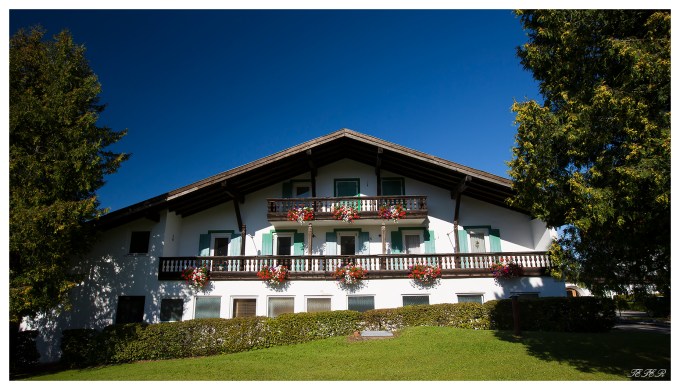
First photos after 8 months in Bavaria!
Amateur Aerial Photography!
Posted on November 9, 2016
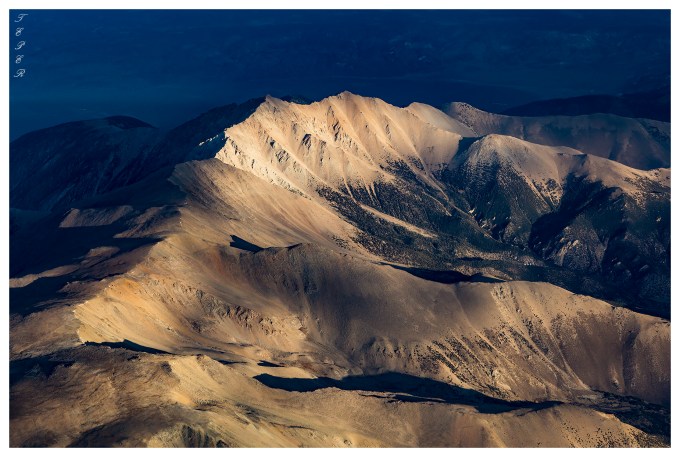
View from above! – California. 5D Mark III & 85mm 1.2L II at f9, ISO 400
Aerial photography is taking photos from an elevated position such as an aircraft or drone. Aerial shots can be very dramatic as the view point is normally unique and unfamiliar to us. I say ‘amateur’ because good aerial photography is quite scientific, and there are photographers who specialise in nothing but aerial photography. Taking photos from the air is certainly new to me, but I wanted to share my findings on a recent experience. A couple of weeks ago I went to the US, and spent some time in California.
I had to make several internal flights, and thought I’d make the most out of it and try my hand at some aerial photographs. Hope you like the results and the post.
Here are some well known tips on aerial photography;
- Most photographers suggest using a very fast shutter speed, faster than you might think. Sort of 1/1000 territory.
- Depending on the scene, many suggest a focal length of around 100mm on fullframe.
- Many also suggest using a polariser on your lens. This is to cut down reflections if photographing through windows. Also, the use of a polariser will increase colour saturation.
- If on a commercial flight get a seat in front of the wings for an unobstructed view.
- Don’t rest the lens on the window or any part of the aircraft as the vibrations can translate into blurry images.
On my flights, I decided to use my 5D with the 85mm 1.2L II lens. I’m a prime guy, and my only zooms are 16-35mm 2.8L II and 100-400mm 4.5-5.6L IS II and I didn’t think they would be suitable. I started off using a polariser but that didnt work too well with the perspex windows. So I had to take it off. I used shutter speeds around 1/1250 and an aperture of about f9 – f11. For me on that day this required a sensitivity of iso 400 which isn’t a big deal.
I then concentrated on finding some good subjects, which as we were flying over the Rocky mountains wasn’t a problem. After looking at the images on the computer, initially I was quite disappointed with them. The images had a lot of haze in them, which was over-powering. In Photoshop I tried the “dehaze” function in combination with other processing and it worked very well. Refer to below example.

Arizona USA, 5D Mark III & 85mm 1.2L II at f8, ISO 400
My experiences;
- Commercial aircraft windows such for photography…
- Don’t use a poloriser as you will get some weird colours happening through the perspex windows.
- The 85mm focal length was good for me, but 50mm would also have been good (didn’t bring it..).
- The raw files needed a lot of work to get them looking good. Although the detail was there.
- The ‘dehaze’ function in Photoshop is very useful to get the most out of hazy images as can be seen below.
- Contrast and saturation tweaks are also important to get the most out of the images.
- Ensure you use a low ISO and a small aperture to get the best image quality, and as always, shoot RAW!

Before and After processing showing how effectively the haze can be removed. Arizona, USA.
Some Results!


First Japan Trip
Posted on August 8, 2016
I have not posted anything in a while! We have been busy re-establishing ourselves in Bavaria, Germany. New job, home, car and lifestyle! There has been so much to do, and all my CF cards have been busting. But now I finally got my main computer back, and I’ve been busy processing my photos from the last 3 months. I hope to be more active on my blog now. Lots to do!
Japan gallery is finally up!
I have always wanted to visit Japan. I finally got my chance this year in April, when we planned to visit during the cherry blossom. We just got the last of the beautiful flowering trees. Japan is a favorite for photographers, and now that I’ve seen it, its easy to see why. Such great culture, people and tradition. So many sights, colour, and unique styles. Cannot wait for my next trip back!

Fushimi Inari-taisha in the rain!
Click here for the full gallery!
https://gormteper.net/photography/travel-photography/japan-2016/
Another great trip to Vietnam!
Posted on December 13, 2015
We had another fantasitc trip to central Vietnam this year! I want to share some of the photos I captured from our trip. Most are from magical Hoi An where we stayed for a week. Click on th image below to see the entire album. Most of the images are taken with Sigma’s fanastic Art primes. Hope you enjoy!!

Kids selling lanterns, Hoi An. 5D3 | 24mm 1.4A | f1.4 | iso1250
 GORM TEPER